MedeA Polymer Expert - Efficient de novo Polymer Design and Optimization
At-a-Glance
MedeA®[1] Polymer Expert provides access to an extensive database (of more than 3 million entries) for polymeric systems, facilitating the exploration and de novo design of polymeric materials with desired properties. The underlying Polymer Expert Analog Repeat unit Library database (PEARL) has been constructed in a careful and logical manner to be both efficient and comprehensive in its coverage of synthesizable polymer systems. MedeA Polymer Expert provides two query interfaces to PEARL, with an efficient database search engine and reporting capabilities, allowing users to leverage substantial polymer knowledge and information in the creation of optimized and novel polymers. MedeA Polymer Expert derived results can be employed in a broad array of MedeA modules, facilitating ongoing exploration and insight generation for a range of physical properties.
Key Benefits
Saves you time by rapidly accessing the vast range of polymer properties to identify materials with desired and optimal properties
Saves you time and money by allowing you to focus on materials that can be readily synthesized or purchased
Empowers you to discover new ways to obtain desired properties, unlocking innovative possibilities
Provides a seamless and intuitive interface to streamline your search process, delivering results quickly and efficiently
Enables highly interactive analysis in MedeA, allowing for easy exploration and refinement of polymer systems
Streamlines your workflows by integrating perfectly with MedeA polymer simulation tools, eliminating the need for manual data transfer
MedeA Polymer Expert enables efficient de novo polymer design and optimization by allowing users to search the vast chemical space of polymer systems based on target properties. Instead of starting from known materials, users can identify candidate polymers that meet specific performance requirements.
The platform is built on the Polymer Expert Analog Repeat Unit Library (PEARL), an analog database generated through systematic fragment-based expansion of a carefully curated set of repeat units. This foundation library, derived from commercial polymers, raw materials, and the scientific literature, contains over 1,000 well-characterized entries and is continuously maintained and refined by Materials Design.
Using analog building techniques, PEARL expands this foundation to over three million repeat units while maximizing chemical diversity and controlling synthetic complexity. This structured approach enables broad and balanced coverage of polymer property space, providing valuable insight into how molecular structure influences material performance.
Combined with an efficient query interface, powerful search engine, and integrated reporting tools, MedeA Polymer Expert allows researchers to rapidly identify, evaluate, and prioritize polymer candidates, supporting both materials discovery and informed selection.
The basis of properties stored in PEARL and searchable using MedeA Polymer Expert is the non-group based methodology pioneered by Dr. Jozef Bicerano [2] originally developed at Dow Chemical. The underlying methodology employed by MedeA Polymer Expert is described in the peer-reviewed literature [3].
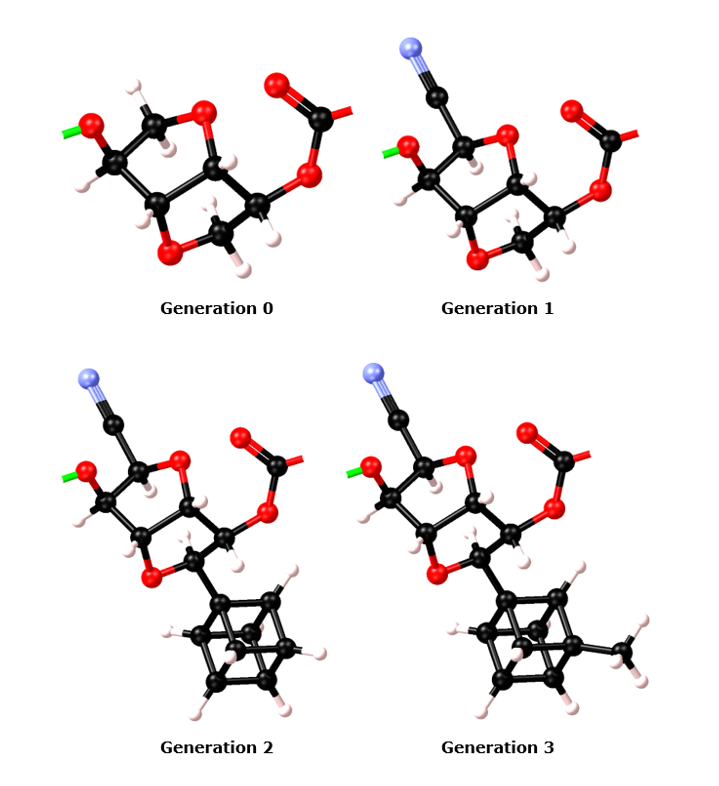
An illustration of the construction of PEARL, taking poly(isosorbyl carbonate) (or PIC) as an example. Generation 0 is taken directly from the initial curated library. Derived structures are then built by adding fragments to the initial scaffold. The PEARL database has been constructed to maximize chemical property space coverage while minimizing synthetic complexity [3].
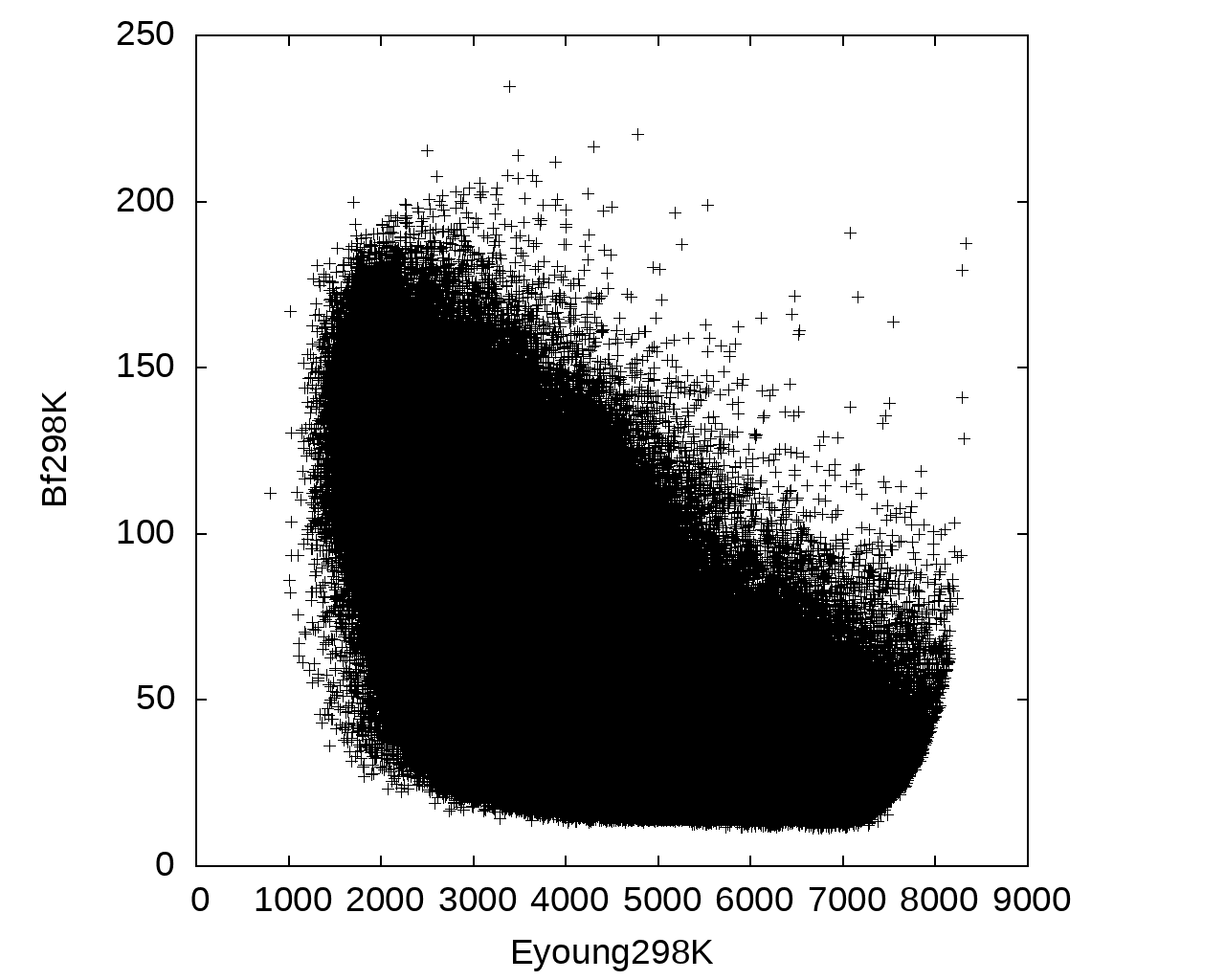
The PEARL (Polymer Expert Analog Repeat unit Library) database contains over 3 million repeat with diverse properties. The graph above shows a plot of brittle fracture stress versus the Young’s modulus for each of the repeat units represented in PEARL. The diverse range of these properties and the even sampling of both these properties are evident from this diagram. A variety of such distribution plots, derived from the work of Ashby [4] , were employed in the development of PEARL to ensure even and comprehensive coverage of property space by the database.
Searchable Properties
Thermophysical
Glass transition temperature, Tg
Temperature of half decomposition
Change in molar heat capacity at Tg
Coefficient of volumetric thermal expansion
Cohesive energy
Cp of liquid
Cp of solid
Density
Molar volume
Solubility parameter
Surface tension
van der Waals volume
Thermal conductivity
Biobased origin
Electronic and Optical
Diamagnetic susceptibility
Dielectric constant
Molar refraction
Refractive index
Volume resistivity
Mechanical
Brittle fracture stress
Bulk modulus
Poisson’s ratio
Shear modulus
Shear yield stress
Young’s modulus
Entanglement
Entanglement molecular weight
Entanglement length
Critical molecular weight
Steric hindrance parameter
Characteristic ratio
Molar stiffness function
Additive portion of molar viscosity-temperature function
Activation energy for viscous flow at zero flow rate
Zero-shear viscosity
Transport
Permeability to CO₂, N₂, and O₂
Zero shear viscosity
Diffusion coefficients for N₂ and O₂
Synthetic Difficulty
Each polymer returned by MedeA Polymer Expert is tagged with a Synthetic Difficulty (SD) score. As the name implies, this property provides a measure of the ease or difficulty with which a given repeat unit may be synthesized. Low scores (around 1.0, for example) indicate synthetic ease and higher scores (which can be as high as 10.0) indicate progressively greater degrees of synthetic difficulty. This property is based on the work of Ertl and Schuffenhauer [5] as extended to polymeric systems by Trepalin and coworkers [6]. As Trepalin and coworkers have noted, increasing synthetic difficulty correlates with increased polymer cost [6].
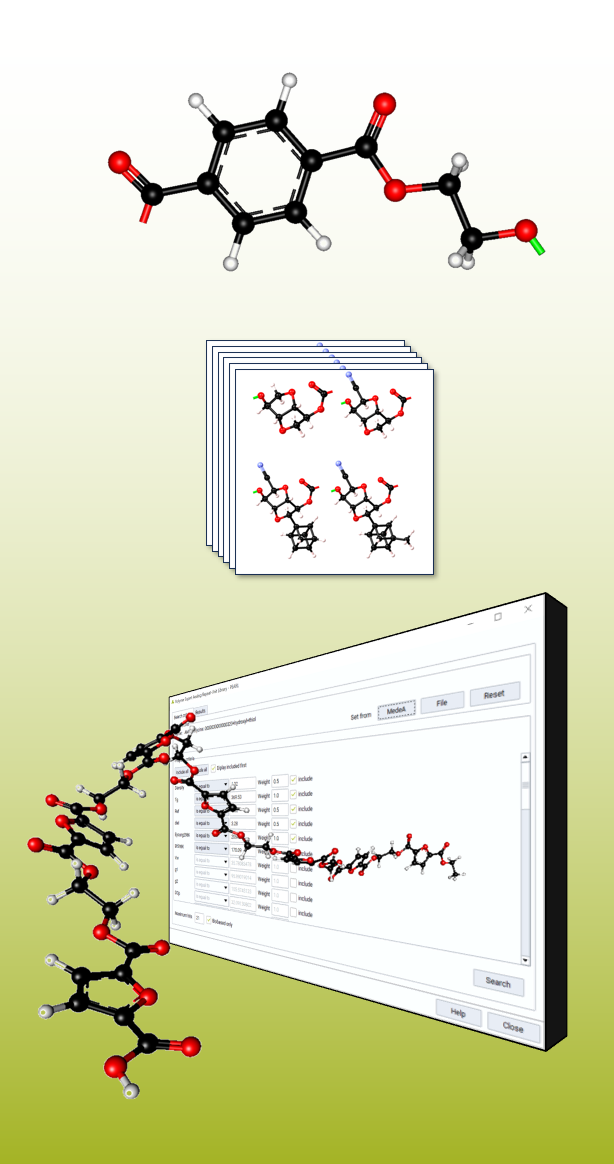
An overview of the key elements of the MedeA Polymer Expert: Starting from a defined set of properties, derived in this case from polyethylene terephthalate (upper image), the Polymer Expert (center image) proposes materials that deliver similar characteristics (lower image).
Query Modes
Each property can be employed in querying the PEARL database in a variety of ways. The database can be searched by similarity (employing all properties), and via logical queries, such as: Is a given property above or below a specified value, or within a defined range? is the repeat unit bioderivable? and/or can the repeat unit be synthesized straightforwardly?
These query elements can be combined in a flexible and intuitive manner to search chemical space for leads for testing, synthetic study, or additional simulation probing desired properties.
PEARL Database
The PEARL (Polymer Expert Analog Repeat unit Library) database has been designed and constructed to span diverse chemistries and to limit the underlying complexity of the >3 million repeat units that it contains. Each entry in PEARL is annotated with MedeA P3C-derived properties and additional information, and its underlying topical structure is stored for rapid retrieval.
Required Modules
MedeA Environment
MedeA Polymer Expert
Find Out More
Learn about building repeat units in MedeA here: How to Build a Polymer with Customized Repeat Unit
Learn about building extended polymer models in this online tutorial: How to Build a Polymer
- download: