MedeA Viscosity - Reliable Momentum Transport Properties from Classical Simulations
At-a-Glance
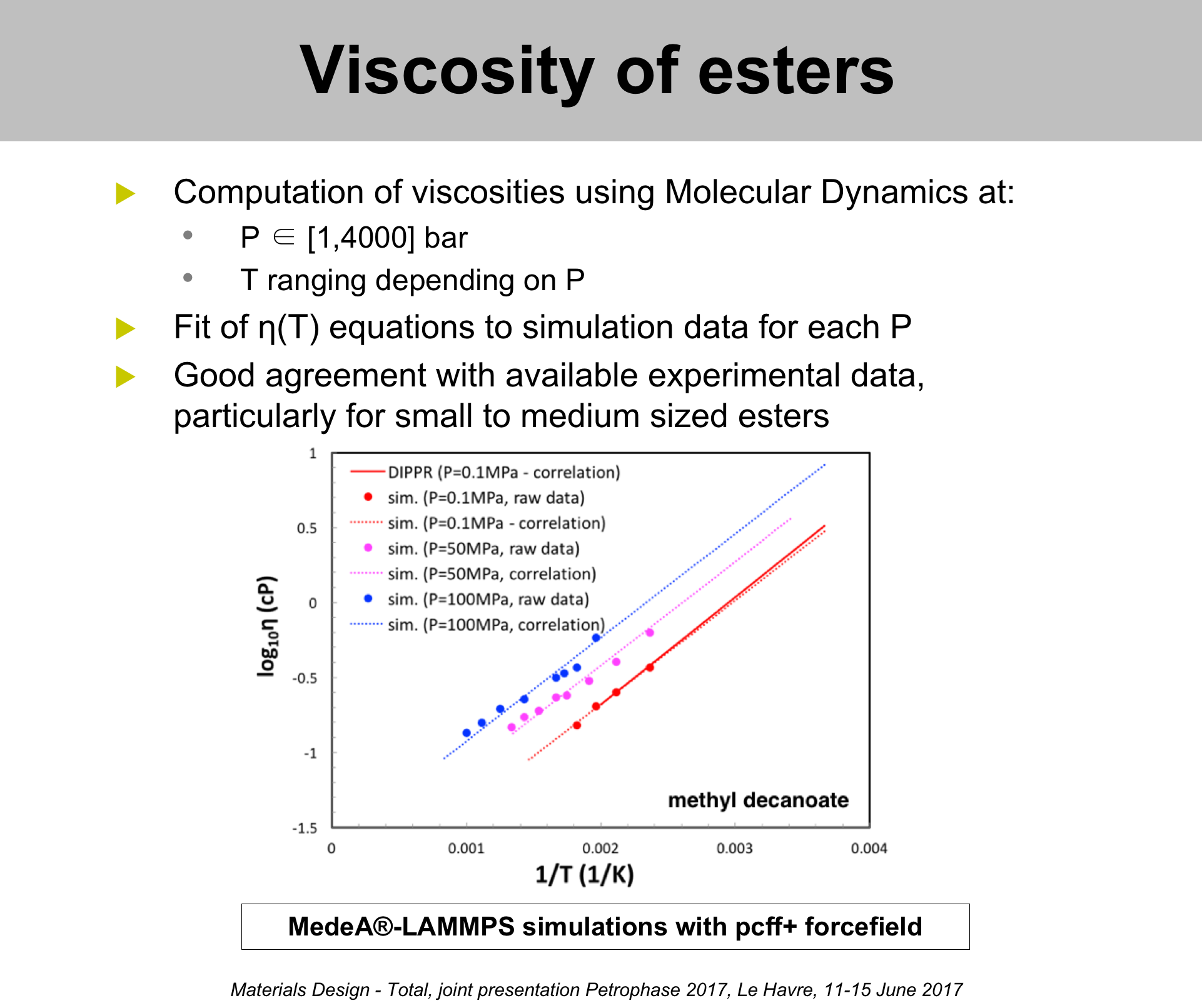
Supporting both equilibrium (EMD) and non-equilibrium (NEMD) calculation methods, the MedeA®[1] Viscosity module automates the setup, simulation, and detailed analysis procedures needed to predict the shear viscosity of fluids and fluid mixtures. MedeA Viscosity uses the LAMMPS simulation engine, in conjunction with appropriate force fields, to compute viscosity of both organic and inorganic materials in the liquid state, reducing the need for difficult-to-perform and expensive experiments.
Key Benefits
Handles the complexity of calculating the viscosity in LAMMPS, letting you focus on the science
Easily sets up multi-step calculations with MedeA‘s powerful flowchart interface, and supports recall of these calculations later on, to modify conditions before rerunning.
Performs automatic graphical analysis of the viscosity and fitting of the results, computing the numerical value of the viscosity and statistical error bars
Validates calculations using graphs and reporting of all intermediate results through the convenient MedeA JobServer web-interface
Works with the MedeA JobServer and TaskServer to run your calculations on the appropriate hardware, centralizing the results
Integrates with MedeA Forcefield for advanced forcefield handling and automated assignment
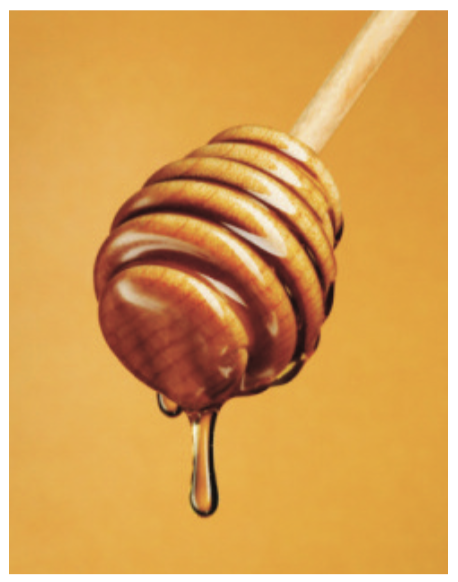
Until recently, computing the shear viscosity of complex mixtures, such as those found in oil field reservoirs, was a major research undertaking. The MedeA Viscosity module has begun to change this situation dramatically, by combining access to fast affordable compute clusters with the power of the LAMMPS simulation code, and with versatile model building within MedeA, simulation management, analysis tools, and accurate forcefields. The end result is that such simulations are now more widely accessible than ever before.
Computational Characteristics
Uses the LAMMPS forcefield engine for high performance on any computer, whether it is a scalar workstation or a massively parallel cluster
Compatible with any forcefield handled by MedeA
Scales consistently with system size and the size of the computational cluster. If you double the system, but run on twice as many CPUs, the computational time remains unchanged
Equilibrium molecular dynamics (EMD) Green-Kubo method:
Requires moderate size boxes of fluid
Length of simulation required depends on viscosity: the higher the viscosity the longer the calculation needed - typical fluids with viscosities around 1 centipoise require 5-20 ns of simulation time
Reverse non-equilibrium method (RNEMD):
Uses elongated cells, and sometimes large boxes of fluids
Calculation time may be less than EMD methods
Enables investigation of shear rate effects
Required Modules
MedeA Environment
MedeA Viscosity
MedeA LAMMPS (Part of the standard MedeA Environment)
Recommended Modules
MedeA Amorphous Materials Builder
Find Out More
Learn more about how Viscosity can be used to study viscosity of materials ranging from simple liquids to industrially important fluids, such as those used in model biodiesel fuels and fragrance compounds, by contacting info@materialsdesign.com.
- download: