MedeA Geometry Analysis - Examine Materials’ Structure at the Atomic Level
✓ Part of the standard MedeA Environment
At-a-Glance
The MedeA®[1] Geometry Analysis module performs analysis of any crystalline or non-crystalline periodic model, providing a wealth of information, including detailed symmetry analysis, atom coordinate, and interatomic distance analysis, together with pair correlation functions and powder diffraction patterns. These are updated interactively as the model is manipulated.
Key Benefits
Quickly shows geometrical characteristics of periodic crystalline and non-crystalline structures
Examines symmetry, atom positions, interatomic distances, and coordination
Detects hydrogen bonds
Displays radial distribution functions and diffraction patterns
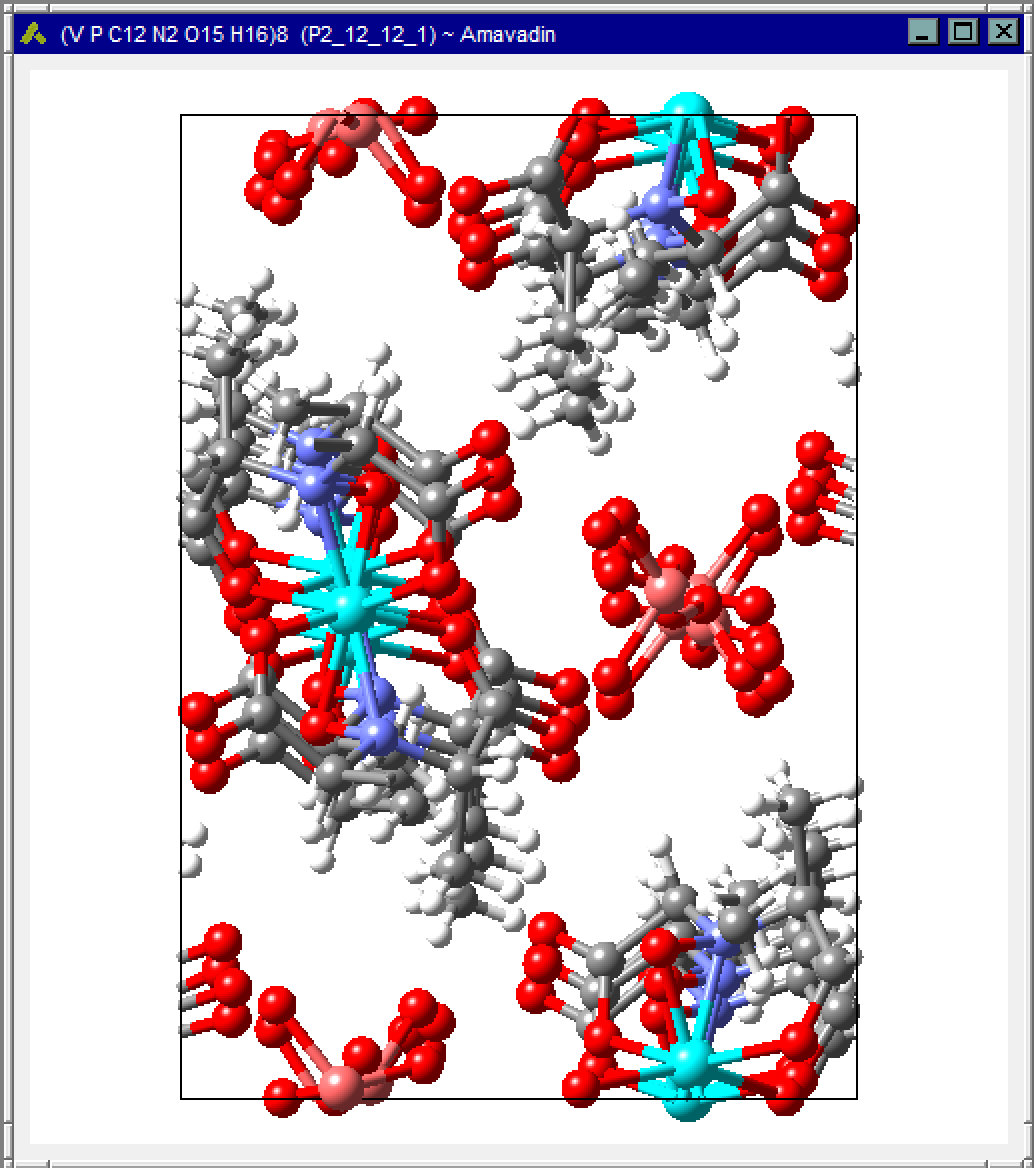
The precise numerical information provided by the Geometry Analysis module gives a more complete understanding of differences in the packing of atoms in similar materials than is apparent by visualization of models alone, and the coordination, pair correlation and diffraction pattern are particularly helpful when comparing results with the published literature.
Key Features
The multiple tabbed panels of the Geometry Analysis module provide structural information pertaining to any selected model displayed within the MedeA graphical interface, including:
General information
Empirical formula, space group name and number, Pearson symbol, and formula units per cell
Cell parameters, volume, and density
Relative locations of occupied sites
Fractional coordinates of individual atoms, occupancy and Wyckoff positions (for crystals)
Interatomic distance and angle information for all atoms, or for selected atoms of interest
Nearest-neighbor atom coordination for a specified reference atom
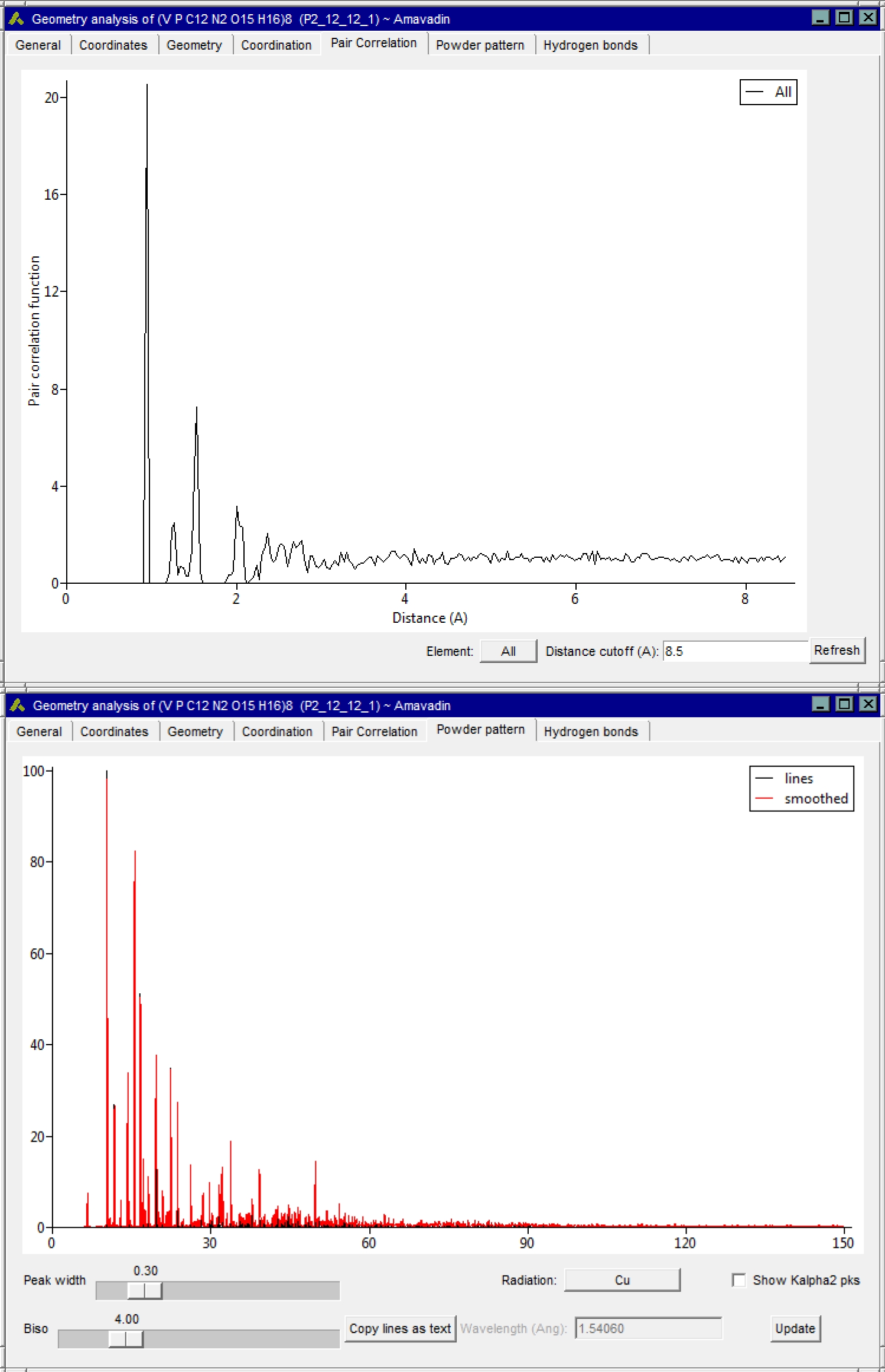
Pair correlation function for all atoms, or for atoms of interest
Powder diffraction pattern for different radiation types
X-Ray - Cu, Mo, Ag, Cr, Fe
X-Ray - Synchrotron
Neutron
Using the Geometry Analysis module you can:
Check interatomic distances and angles in coordination complexes
Quickly look up basic crystal symmetry, unit cell, density, and volume information
View the diffraction pattern expected using different wavelength X-Rays, and contrast with neutron diffraction
Required Modules
MedeA Environment
- download: