MedeA Deposition - Atomistic-Scale Simulations of Deposition, Growth, Oxidation, and Etching at your Fingertips
At-a-Glance
Interactions between particles and surfaces control many important processes including deposition, including Micro-cold spray, or oxidation, growth, surface modification, bombardment, sputtering, and etching. The MedeA Deposition module facilitates the simulations of automated, continuous impact of pre-defined particles on to a surface and enables you to examine the dynamical processes and mechanisms that govern particle-surface reactions and interactions.
Key Benefits
Deposition of any amount of various particle types such as atoms, cluster, and molecules
Impact the surface with user-defined particle velocities or energies, angles, and frequencies
Study the effects of deposition parameters on surface morphology and atomic distribution
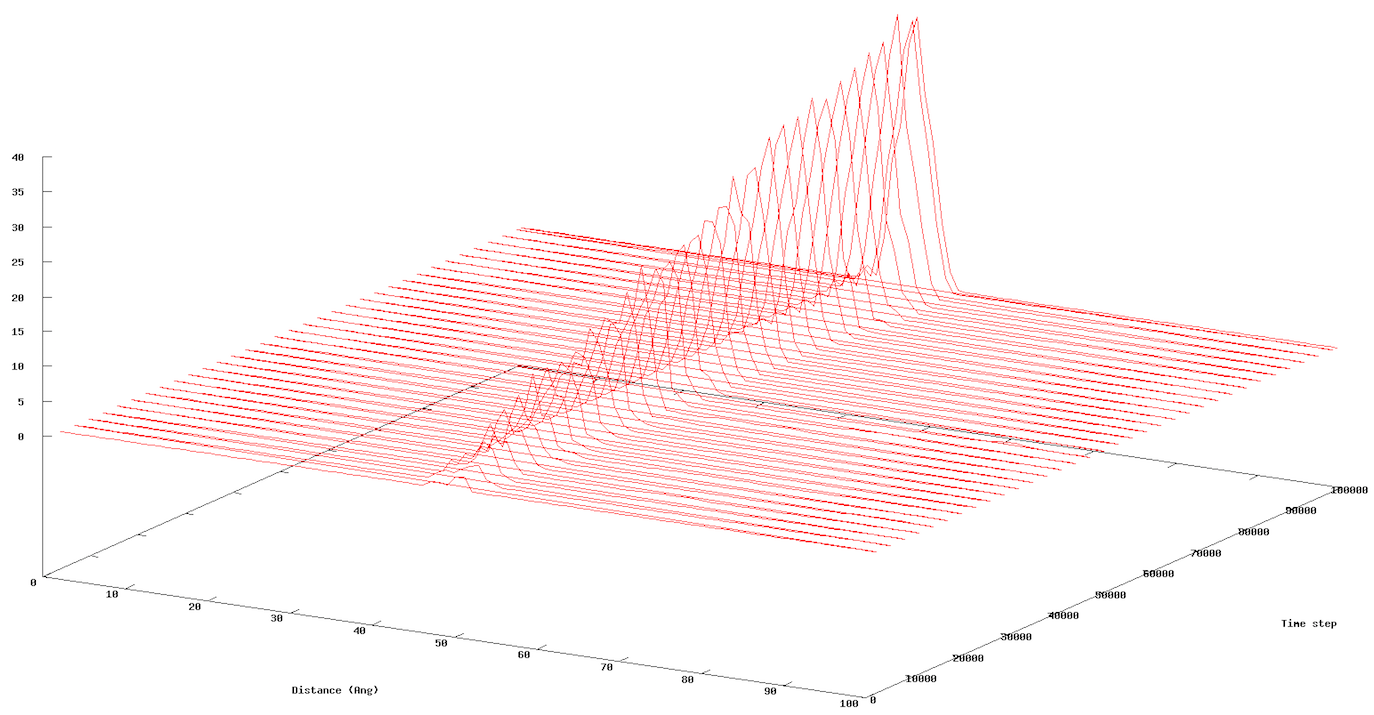
Automated analysis of results such as particle distribution plots
Computational Characteristics
Users define impact region, impact velocity/energy, impact angle, impact frequency, and total number of deposits per deposition particle type
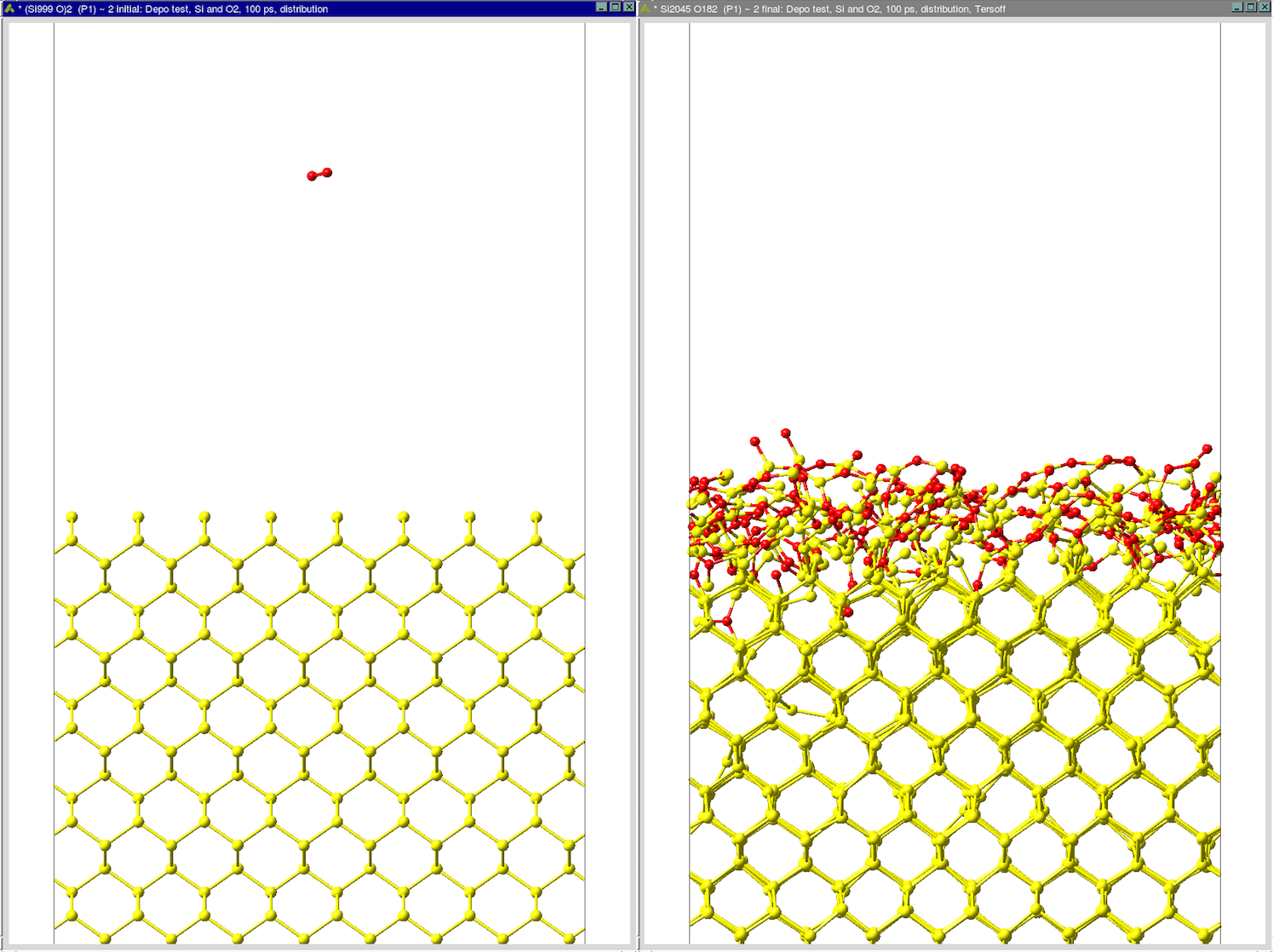
MedeA Deposition uses the LAMMPS classical molecular dynamics engine for efficient performance on computers from scalar workstations to massively parallel supercomputers
Temperature control of the substrate with the Langevin thermostat
Creates distribution plots automatically per deposition particle type for analyses of penetration depth, reaction range, growth thickness, etc.
Works with reactive forcefields such as MLP, ReaxFF, COMB3, Tersoff, and EAM, as well as non-reactive valence forcefields such as PCFF+
Required Modules
MedeA Environment
MedeA Deposition
Recommended Modules
MedeA Machine-Learned Potential
MedeA ReaxFF
MedeA COMB3
Find Out More
Contact Materials Design to see how MedeA Deposition can be employed in the following tutorials:
Deposition of O2 on Si Surface with reactive forcefields
- download: